
29 January 2026
Earlier this month, Minerals Matter hosted our first Ambassador Network webinar of the year. Bringing together ambassadors, educators, and industry partners from across the UK, the session focused on one key question: how can we make our engagement with young people more meaningful, more inclusive, and more effective?
What became clear throughout the discussion was that impactful careers engagement does not require perfection – what it requires is authenticity, preparation, and a willingness to meet young people where they are.
Setting Ambassadors Up for Success
At the start of the session, Minerals Matter shared an overview of our plans for the year ahead, including activity linked to National Apprenticeship Week, National Careers Week, major STEM events, and our continued programme of teacher encounters at quarry sites.
We also talked through how ambassadors can make best use of Minerals Matter resources. A key message was that ambassadors should not feel they need to “start from scratch” when engaging with schools.
“The resources are there to support you – you don’t need to reinvent the wheel. What schools value most is your experience and insight.”
Curriculum-linked activities, videos, and adaptable presentations are designed to reduce the burden on ambassadors while still allowing flexibility in how sessions are delivered.
Practical Guidance on Working with Schools and Careers Hubs
Lauren Oldfield from the East Midlands Combined County Authority Careers Hub offered valuable guidance on how ambassadors can work more effectively with schools through local Careers Hubs, which operate as part of the Careers and Enterprise Company network.
One of the most important takeaways was the need to understand schools’ priorities and constraints.
“Schools are incredibly busy environments. The more clearly you can explain what you’re offering and how it supports their careers programme, the more likely it is to land well.”
Lauren also emphasised that careers engagement is not just for older students. Encounters from Year 7 onwards play a crucial role in shaping aspirations – particularly for students who may not have industry role models at home.
Clear guidance was shared on:
- Keeping sessions focused and age-appropriate: One of the most consistent messages was the importance of tailoring sessions to the age and stage of the students. What engages a primary class will not resonate in the same way with GCSE or post-16 learners – understand your audience beforehand.
- Linking activities to real jobs and skills: Ambassadors were encouraged to explain not only what they do, but how they use skills such as problem-solving, teamwork, communication, and digital literacy in their day-to-day roles.
- Avoiding jargon unless it is explained clearly: The guidance shared was not to avoid technical language altogether, but to introduce it carefully and explain it in plain terms.
- Following up after sessions to build longer-term relationships: Following up might include sharing additional resources with teachers, offering to return for another year group, or signposting opportunities such as site visits, work experience, or virtual talks.
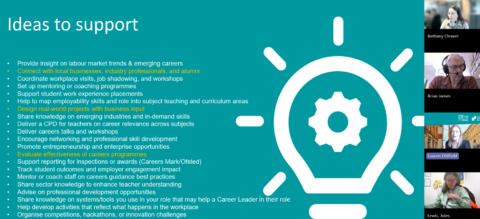
Lauren gave some useful ideas of how ambassadors can support schools with different offers of outreach.
Tips from the Front Line: Ambassador Experience
One of the most insightful parts of the webinar was hearing from Minerals Matter Ambassador Bethany Cleaver from SLR Consulting, who shared practical examples of outreach delivered across primary, secondary, and post-16 settings.
Bethany highlighted the importance of tailoring content and expectations depending on the audience.
“With younger students, it’s about curiosity and excitement. With older students, it’s about relevance – how this connects to subjects they’re studying and decisions they’re starting to make.”
She also shared simple but effective engagement techniques, including:
- Using physical samples and props wherever possible
- Building in quick quizzes or questions to keep energy up
- Encouraging students to ask any question, even if it feels basic
Bethany spoke candidly about the impact of representation, particularly when engaging students who may not see themselves reflected in traditional images of the industry.
“Sometimes just seeing someone like you in a technical role can change how a young person thinks about what’s possible.”
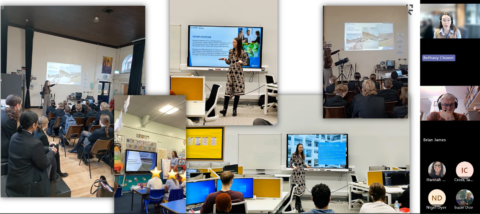
Bethany Cleaver showing examples of the outreach work she takes part in.
Honest Advice for New Ambassadors
We closed the webinar with practical reflections from Richard Adams of Anglo American, who shared guidance that strongly resonated with attendees—particularly those new to school engagement.
Richard encouraged ambassadors not to overthink their role, and that schools outreach is for all types of roles, not just technically focused;
“You’re not there to lecture or test anyone. You’re there to open a door and show what’s behind it.”
He also reminded ambassadors that engagement does not always look the same in every classroom.
“Some students will be visibly engaged, others less so – but that doesn’t mean they aren’t listening. Impact isn’t always immediate or obvious.”
Key tips included:
- Being yourself rather than trying to “perform”
- Using real stories, including challenges and mistakes
- Praising participation to build confidence
- Focusing on awareness rather than recruitment
- Bring a spare activity incase you have some unexpected spare time to fill!
Key Take- Aways
By working together as a network, learning from one another, and making use of the support available, we can help ensure more young people understand the vital role minerals play in everyday life – and the wide range of careers connected to our industry.
Our next Ambassador Network meeting is on April 22nd and will focus on sustainability in the minerals sector, we are looking forward to continuing these open, practical conversations.
If you are interested in getting involved in the ambassador network, we encourage you to explore the resources on our website or contact the Minerals Matter team directly.